Sunday, December 30, 2012

Repost: Feuerzangenbowle

I thought I'd share this post again (I originally posted it in 2009), since I'll be making this recipe for New Year's Eve. Get out the fire extinguishers and let's make some punch! 


Today's post has nothing at all to do with fashion, unless you count the subject's ability to stain your clothing. It does have to do with booze and lighting things on fire though, which may perhaps interest you. This post is about a little-known (in the US, anyway) German beverage called Feuerzangenbowle. And today I'm going to tell you how to make it, because it's a drink that's just perfect for this time of year. I'll start by describing the whole process and then I'll give the list of ingredients and quantities at the end.

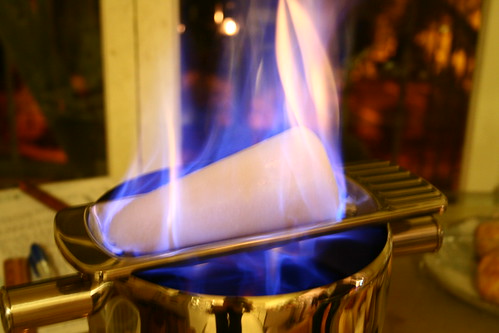
Feuerzangenbowle is sort of like a mulled red wine, and starts out pretty much the same way, with red wine being steeped with spices and citrus fruit. But because of the way it's prepared, this drink is well-suited for a large party with friends, firstly because of the large quantity that the recipe makes, and secondly because the fire is pretty damn impressive. What's shown in the photo above is the final preparation step, which involves soaking a dense cone of sugar, called a Zuckerhut, in Bacardi 151 and lighting it on fire over the heated wine mixture. The idea is to carmelize and melt the suger, which drips into the wine through a long slot in the bottom of that metal tray.

My love of Feuerzangenbowle started years and years ago when a friend introduced me to it after spending some time doing an intership in Stuttgart, Germany. I used to have one of the metal trays, called the feuerzangen, but lost it to my ex; for years I've looked for a replacement, and finally found an entire set, which is sort of like a fondue set with an alcohol burner underneath. I special ordered it from Germany with the help of the delightful Erika at German Specialty Imports in Prior Lake, MN, and last weekend I gave it its first trial run. You really don't need a lot of fancy equipment to make this drink, but you've gotta love that gorgeous German engineering, which I assure you is a vision in all its gleaming stainless steel glory. If you can't get your hands on a proper feuerzangen, you can try using a large, slotted metal spoon or something similar. It's fairly important to rig up a system that you won't have to hold onto though, because the sugar takes a good 15 minutes to burn, and then of course there's the little matter of it being on fire.

Besides the feuerzangen (or your reasonably MacGyver'd-up substitute), the other unique thing you'll need for this recipe is a Zuckerhut, which can be found at German delis or import stores. Alternately, you can use a whole pile of sugarcubes, about 250 grams' worth of 'em, to be precise. Having made it both ways, I can tell you that although the sugar cubes work just fine, the zuckerhut is a lot easier to work with.

To get started, you'll first need to steep the spices (cinnamon, cloves, and optionally cardamom) and the citrus (oranges and lemons, both the juice and part of the peels), with the wine (choose a dry red wine). To do this you can either mix everything together and leave it in the fridge overnight, or alternately you can heat the mixture until the wine is steaming (not boiling!), and let it steep for 15 minutes or so. For my test run I tried the second method, and it worked great.

Once the wine mixture is ready, it's time to prepare the sugar and rum. When using a zuckerhut, I like to place it in a small container, pour Bacardi 151 over it until no more absorbs, and then let it soak for several minutes, because I find that more of the rum soaks in and the sugar will burn longer without additional maintenance (which I'll discuss shortly). If you're using sugarcubes you can still use this approach, just don't let them soak long enough that the sugar dissolves.

Now, remove all the spices and peels from the wine, and heat the wine in a metal pot it until it's steaming. Position the feuerzangen above the pot of wine, place the rum-soaked sugar in the feuerzangen, stand back, and light it. The sugar makes a beautiful blue flame as it burns (it's even prettier with the lights off), and the dripping caramelized sugar makes a satisfying sizzling sound as it hits the wine.

As the sugar burns down, two things can eventually happen: the flame can go out, or the sugar can start to burn and blacken. To prevent this, you will need to periodically douse the sugar with more rum. This is where the real pyrotechnics get going, because when you add more rum, the flame will shoot up about a foot and a half or more. Obviously, it's important to have a steady hand and nerves of steel. It's also EXTREMELY important not to pour the rum directly from the bottle. Have you ever heard of a Molotov Cocktail? Well, I'm almost 100% sure you don't want one to go off in your house, and putting an open flame near the mouth of a bottle of high proof liquor is, in essence, the same thing.

Instead, pour a small amount, maybe 2-3 tablespoons, of liquor into a metal ladle or large spoon, and carefully but quickly and smoothly pour it over the sugar. You'll need to brace yourself for the flame, but don't chicken out! -- just pour it right over the sugar, pull the spoon back slowly, and if necessary, blow out the now flaming spoon. Easy! If it's your first time making it, and depending on how adept you are with handling fire, having someone else standing by with a fire extinguisher might not be a bad idea. It's also a good idea to make sure you don't have a lot of loose clothing on that could get in the way of the flame.

Once the sugar is all melted, the feuerzangenbowle is ready to serve. I like to use regular old coffee mugs, since the drink will be piping hot. My favorite part is the initial sensation as you raise the mug to your lips; you're hit with a strong citrus smell, and the fumes from the steaming hot, residual Bacardi sort of sting your nose as you take a sip. The sugar and spices nicely balance the dry wine, the drink being far less sweet than you might imagine, given the amount of sugar that goes into it.

With my recent test batch I was also pleasantly surprised to find that the feuerzangenbowle will keep for several days in the fridge, if for some reason you find yourself unable to consume 3 liters of alcohol in a single evening. I've never tried scaling the recipe down, as I've usually only made it for a group, though I found this photo on the left that suggests there are also single serving approaches. That doesn't sound nearly as fun though, or as delightfully dangerous.

Feuerzangenbowle Recipe:
2 cinnamon sticks
7-8 cloves
2-3 cardamom pods
3 oranges (juice and a large slice of peel)
2 lemons (juice and a large slice of peel)
3 Liters dry red wine
2-3 cups Bacardi 151
1 zuckerhut, or 250g sugarcubes

Equipment:
feuerzangen
large metal pan
long-handled metal spoon or ladle

Labels: , ,

Friday, June 24, 2011

Tattoos and Interviews


Top: Anthropologie.... Vest: All Saints....  Skirt: Sunhee Moon....  
Bracelet: Leslie Danzis....  Sandals: Camper

Yesterday Sal and I got a great reader question, and the answer I put together seemed like good material to develop into a post. Here's the question:
I have an ankle tattoo and really like dresses and skirts, but am starting the interview process again and am feeling wary of my tattoo showing in my interview outfits. (I feel like my pants outfits are so boring, and I don't have an actual suit for interviews)
I'm interviewing for admin type of jobs. I go back and forth with this, I feel that my tattoos are part of me and people shouldn't be concerned with them, but then I remember that there are a lot of very conservative people out there. I also don't know the dress code rules at the jobs I'm applying for and if they have a "No visible tattoos" policy, I would offend them right off the bat. (although, I probably wouldn't want to work for a company like that)

As you're all well aware, I have some pretty dramatic body art that I display without reserve at work. Of course, I work in a technical job for a company that is well-known for its laid back culture, in a very tolerant and diverse region of the country. But interviews are always a little trickier than the job itself, regardless of the job you're applying for, so it's important to consider a few different factors when determining whether it's acceptable or desirable to show one's ink during the interview process.

Geographical Region 
Obviously in the super laid back San Francisco Bay Area it generally wouldn't be a problem to show a tattoo for any but the most conservative of industries, such as law and finance. Which brings us to...

The Industry You're Applying To
Again, law and finance are two where visible ink or piercings are likely to be a big no-no. Academia is probably a gray area, and may vary department to department. Tech (and biotech) companies, tend to be more relaxed and in general I'd say that showing a tattoo wouldn't be any big deal, but that also depends on what department you're applying into. The technical departments are more tolerant, while marketing, legal and sales are more conservative.

Company Size and Age
Just like many people, companies tend to get more conservative the older they get. My theory is that a small, young company needs people who operate outside the norm; they're looking for innovators who may carry over their innovative spirit into their personal appearance. As a company ages and achieves success, it wants to maintain the status quo and won't be as drawn to the rebellious entrepreneur types anymore. In general the larger a company is, the more conservative it tends to be as well, for the same sort of reasons. In biotech for instance, I'd dress more creatively and probably intentionally show my tattoos if I were interviewing for a start-up company, whereas I'd go with more traditional dress and possibly cover at least most of my tattoos for a big company like Johnson & Johnson or Merck.

How Strongly You Feel About Your Ink
Personally, I'd never want to work for a company that would have an issue with my tattoos, but take this point with a HUGE grain of salt, because I've also never been unemployed for any great length of time and thus have been able to stick to my guns. Under extreme circumstances I might throw my values to the wind and cover up for the sake of getting a job. Ideally though, I prefer to let people see what they're getting, ink and all, so I make sure to show at least one of my tattoos when I interview. Another point to consider is whether you'll be required to go in for several interviews; in that case you might want to start out covering all of your tattoos, and if you get called back you can ease off little by little and allow some ink to show. That way you don't hurt your chances right off the bat, but you can still remain true to yourself too.

Size, Image, and Placement of Your Tattoos
A small tattoo placed in an inconspicuous area is going to be a lot easier to get away with than a larger tattoo in a spot that people aren't traditionally used to seeing one. For instance, I'm well aware that the tattoos on my upper arms are probably too much for most interviews. Not only are they in a spot that's not often seen on women, they also depict  Drinky Crow swilling booze while sailing and subsequently sinking his boat. Not exactly corporate material. Those I would cover up for an interview; the others, most likely not.

Sal has also written about interviews as well: 
Corporette has a decidedly different take on ink at the office, which is not surprising given their focus on the conservative corporate environment. But it's worth taking a look at these: 

Finally, let's hear from you! I'd like to get a sense of how tattoos are handled in different types of industries. Whether you have a tattoo or not, please tell us: what region, industry, and job type you're in; a little about the size, age, culture of your employer; whether you or others you work with show tattoos at work; and finally, if you do have tattoos, did you show them during your interview?

Labels: , , , , , ,

Thursday, April 1, 2010

What Makes it Special?


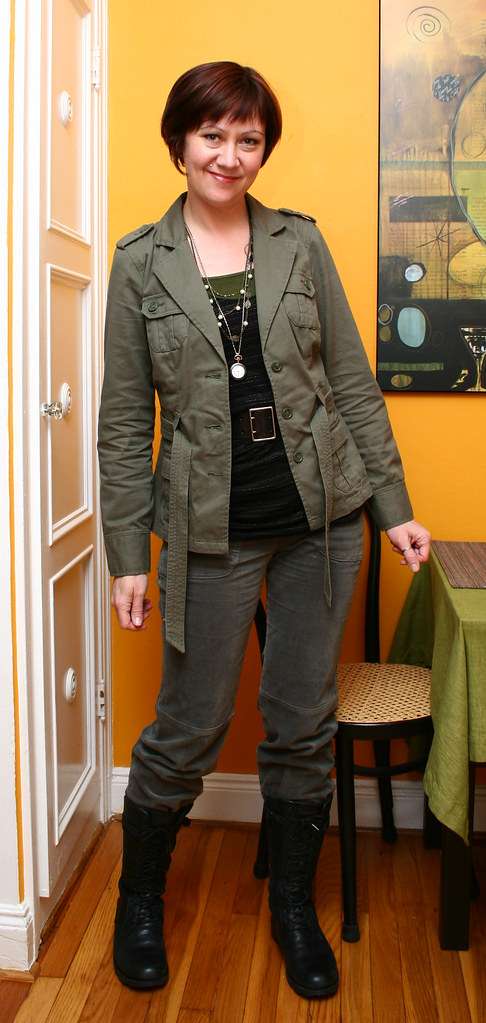
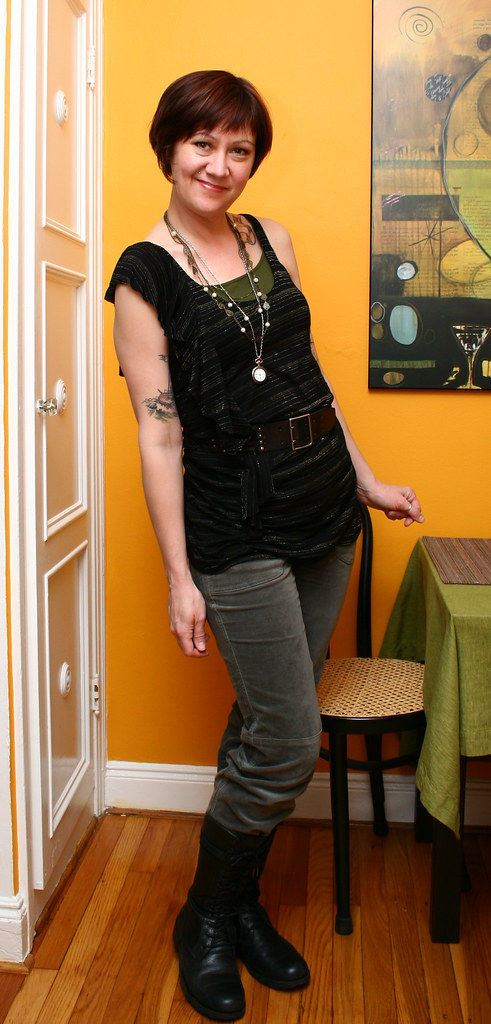
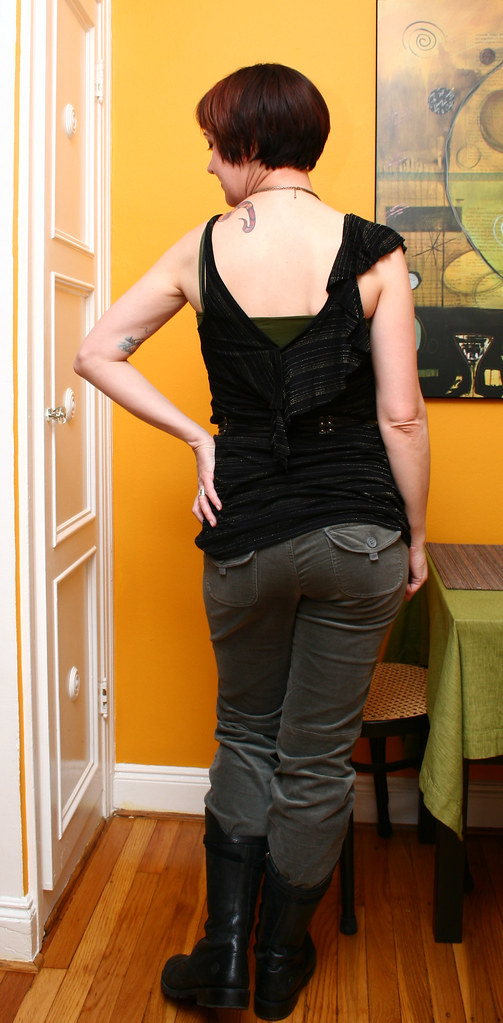
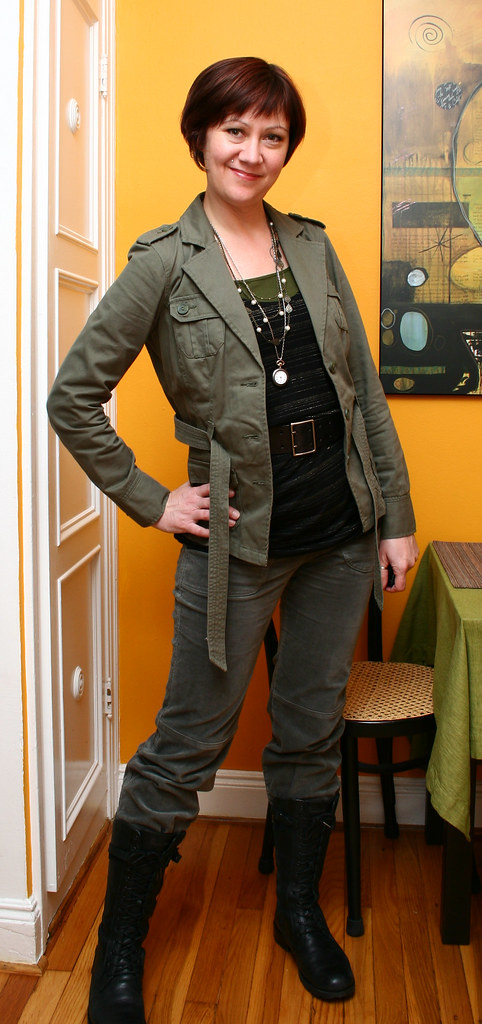
With this outfit I wanted to try out a military/utility look, which I've seen cropping up all over the place lately. The one thing I really wanted to avoid, though, was having the outfit look too uniform-ish, so I added my asymmetric, ruffled tunic and left the jacket hanging open for a more relaxed look. To keep the tunic in place and give me some waist definition while still keeping the look less structured, I put a belt under the jacket rather than over it. I liked the added interest of having the jacket ties hanging down.

These pants are some I've had for quite some time, but they're generally only used for casual weekend outfits because they're too short to be worn with heels. Tucking them into boots made them a great alternative to the incomprehensibly popular cargo pants. I simply cannot understand the appeal of pants that make your thighs look bigger and your legs shorter, and frankly, the idea of carrying cargo in your pants is sort of gross. This pair, on the other hand, has cute, buttoned pockets in the back, and the bottom hem (if you could see it) of each leg has a button tab detail, which is more than enough utility styling without a hint of load-carrying capacity.

The tunic and jacket are both fairly basic pieces, but I want to call attention to them because they meet a particular criteria that I try to apply to all my clothing purchases. Whenever I'm considering buying something, I always ask myself, "What makes it special?" The something special could be really minor; on the jacket it's the fact that the buttons on the pockets are offset, and on the tunic it's that asymmetric ruffle. But whatever the something is, it should set the item apart from similar ones, so that you can always point to that detail as the reason you bought it.

Asking what makes it special is a great way to keep yourself interested in your wardrobe, and also a great way to scrutinize a potential purchase. Because if you can't point to at least one feature that makes the item unique, then you should really keep looking. Now obviously I'm not talking about true basics such as layering shirts, which only need to fit well and be comfortable to do the job. This is about items which have the potential to be the main focal points of an outfit, because they're the ones that are going to get noticed. And I'm not even talking about buying pieces that are overtly unique and one-of-a-kind, such as my Attila skirt; the 'What makes it special?" approach can be applied even to simple wardrobe staples. Here are a few ideas for looking for a little bit of 'special' even in your basics:

  • Pencil skirts: Look for interesting pleats rather than a simple slit, topstitching or button details, or textured fabrics. A uniquely-cut pencil skirt is also a great find; look for gathers up one side or an asymmetric hemline, for instance.
  • Dress pants: Try fabrics that have textural stripes rather than a solid color. Buttons and topstitching will also add interest.
  • Shift dresses: Neckline details, pockets, and piping can jazz up this wardrobe basic.
  • Jeans: Look for jeans that have an interesting wash or unique hardware. Some jeans also have colored stitching at the hem that's only visible when the cuffs are turned up.
  • Blazers: Again, buttons can make all the difference, as can lace-trimmed cuffs, detailing in the back, or a textured fabric. And like pencil skirts, look for blazers that have a unique cut.
  • Anything striped or plaid: Look for an interesting arrangement of the pattern, such as perpendicular panels, a bias cut, or a mixture of different stripe sizes.
These are just a few details I've come across that can elevate an item to special. Think about your favorite pieces; what details make them special to you?

Jacket: thifted
Tunic: Free People
Belt: thrifted
Pants: La Redoute
Boots: Dr. Marten's

Labels: , , , , ,

Thursday, March 11, 2010

Travel Series Wrap-Up

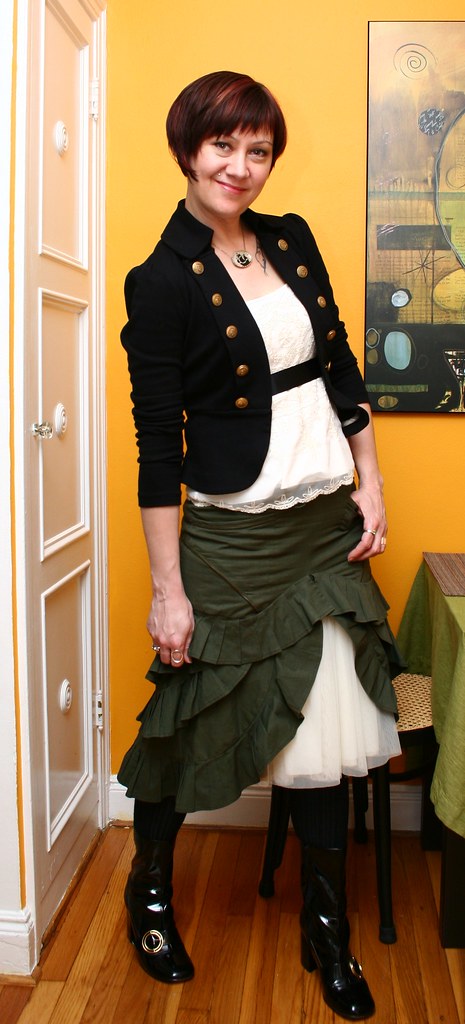
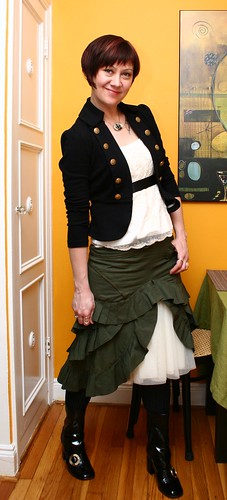
Today I thought I'd combine a regular outfit post with a follow-up on my Making Your Travel Dreams a Reality series from the last couple of weeks. First up, the outfit. This one is another Jack Aubrey-inspired ensemble, which always seems a natural choice for this little jacket. I wanted to pair it with a more formal-looking top, so I chose this lace-embellished camisole, but felt it needed a bit of waist definition. I tried a couple of belts but found that the buckles were too distracting, so in the end I just took a wide piece of grosgrain ribbon and tied it in the back, which worked perfectly.

I have to admit that the heavy tulle skirt stuffed underneath the form-fitting olive one was a bit daunting at first, because it felt very thick. But since the fullness at the bottom of the skirt made a nice contrast with the nipped-in waist of the jacket, I went with it. In the end I was glad I did, because the whole outfit had the vibe I was going for, and the two skirts together made the most pleasing swishing sound when I walked, which really enhanced the feel of the whole thing.

Outfit details: Jacket - F21, camisole: Papillon, Olive skirt: Skingraft, tulle skit: Noa Noa, boots: Mia


Boat traffic on the Danube River, Budapest, Hungary


First up for the travel wrap-up part of the post, I thought I'd share the results of the survey I conducted, and how I plan to handle travel-related posts based on the results. Out of 97 responses, here's the breakdown:


- 66% would like to see me feature more travel posts
- 24% think they're ok once in awhile but not as a regular feature
- 10% say just stick to fashion

- Of those who like the travel posts, 75% would like to see them once a month and 16% say maybe once every 3 months.

Here's the breakdown of what topics you'd like to see me cover:
- Travel how-to's: 70%
- Destinations: 68%
- Budget Travel: 63%
- Travel-related links: 35%
- Other: 10%

In order to strike the best balance, here's my plan: I'll make the travel posts a regular feature, and post as often as I have topics; I'll shoot for roughly once a month but realistically it will probably turn out to be more sporadic than that. However, since some of you don't enjoy the travel posts at all, I'll post them on the weekends so that the number of fashion posts remains the same; those of you who aren't interested in the travel posts can then easily skip over them.

As for topics, the numbers that came up in the survey pretty much reflect the relative frequency of the topics I'd choose anyway, so the proportions should come out to mostly travel tips, destinations, and budget travel, with a few links and other tidbits thrown in from time to time as I find them. Several of you commented that you'd like to see me explore the relationship between travel and style, either as it relates to style in different destinations or to looking stylish while traveling; I will definitely weave these ideas into the posts as frequently as possible, since this is a style blog after all. Thanks to everyone who participated in the survey; it was very helpful feedback!


Spectacular art nouveau architecture in Riga, Latvia


And now, I'll circle back to some of the topics covered in my series, and see if I can answer a few of your questions as well as share some of your input with everyone else. Here are some additional thoughts based on the comments I received on my posts:

Renting a condo, apartment, or house: This is a great option if you're traveling with friends. I've rented apartments in Prague and Riga that I split with friends, and they came out to just slightly more than a sparsely-equipped hostel, and with a lot more privacy, security, and amenities. The gorgeous villa that my friends and I rented in Mexico in 2008 cost each person under $300 for the entire stay. This is a great way to have more luxurious lodgings on a budget.

Bed and Breakfasts are another great option for inexpensive lodging that offers a bit more comfort and charm than hostels. Airbnb.com is a resource I wasn't familiar with, but sounds like a great way to rent a room on the cheap, as is Couchsurfer.com. Fare Compare is a good resource for finding cheap flights.

Travel insurance: This is a great idea if your plans are at all uncertain, and particularly if you don't have medical insurance that will cover you while traveling. The cost is usually modest and can save you thousands if you need to cancel or have mishaps while abroad.

Studying abroad: If you are still a student, SERIOUSLY CONSIDER this possibility. You will not regret it! I'll tell you a little story about this. In college when I was studying herpetology (the study of reptiles and amphibians, not the herpes virus!), my class was offered an opportunity to do some field work in a remote region of Africa, which I passed up because I had a boyfriend, who I later married. I could've had an obscure species of frog named after me, and possibly my own Discovery Channel show; instead I got an ex-husband. Think about it.

A great example of how to think creatively about your options for travel (from Ali): "Last year, for example, I was waiting for my next job to begin and planned to move to a cheaper apartment. In the interim, I put everything in storage, and I spent a month and a half in Asia for the same price it would cost to barely survive here in California. In the end, I didn't sacrifice a dime more than I would've spent had I not gone. And I got an incredible experience in return." I just love stories like this; thank you for sharing, Ali!

If you travel for work, find out if you have the option of building in some extra vacation time at your destination. I did this in 2008 when I had a conference in Germany; my company covered the airfare and I ended up with one of my long flight days being built into the business part of the trip rather than eating up any of my vacation time.

Some additional thoughts on traveling with kids: Small-to-medium sized European cities such as Salzburg and Krakow got the thumbs-up from several readers. Camping was mentioned as a great low-cost option, and a good strategy seems to be to choose a central location and take day trips from there, which is far easier than packing up several times and traveling to a new destination. Regions with good local produce and hearty regional foods -- think France, Portugal, Italy, and Spain -- are great places to save money by buying produce, bread, and fresh cheeses from local markets and making your own meals.

Security: A couple of people mentioned this, so I'll spend some time on this one. I know that money belts are often touted as a travel must-have, but I have to admit that I generally don't use one. Why? Well, they're uncomfortable and they look bulky under my clothes, plain and simple. Plus it's a pain to get things out, and it usually means exposing my midriff to do so. But I'm a city gal and I'm used to city ways, so I figure I'll be fine in any other city I go to. That said, I was pickpocketed in Rome, however all the thief got was about 20 euros and a couple of useless cards, because I made sure not to carry anything irreplaceable in any conspicuous place like a purse. It all comes down to being alert, avoiding overly-crowded places, not being too bogged down with bags and luggage (which was my mistake in Rome), keeping track of your purse or wallet, and not getting suckered by con artists. Common sense is really all it takes, and honestly, getting a few things stolen is only the end of the world if you let it be.

As for violence or other safety concerns, do not let the media's sensationalism of isolated cases blow things out of proportion for you. Right now Columbia is widely considered to be one of the most dangerous places to travel, and yet it's also quickly becoming one of the hottest new destinations (and in fact, a friend of mine just went there and had no problems). It's my feeling that pretty much any place can be safe (though obviously I wouldn't recommend going somewhere like Haiti or Sudan), just as any place can be unsafe if you don't exercise good judgement. Most countries have some sort of travel warnings associated with them; in fact, the good old USA seems like a hotbed of terrorist activities according to the Australian government. It's important to keep some perspective.

Destinations: There were several people who chimed in with some great suggestions for destinations; I'll point you to the comments, particularly on Part III, for those. Among the cities mentioned were Istanbul (which is on my short list already), Marrakesh (ditto on the short list), Edinburgh (headed there this year, among other places), Languedoc, Gdansk, and a few others.
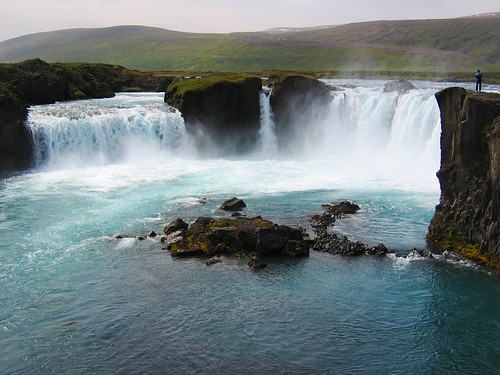


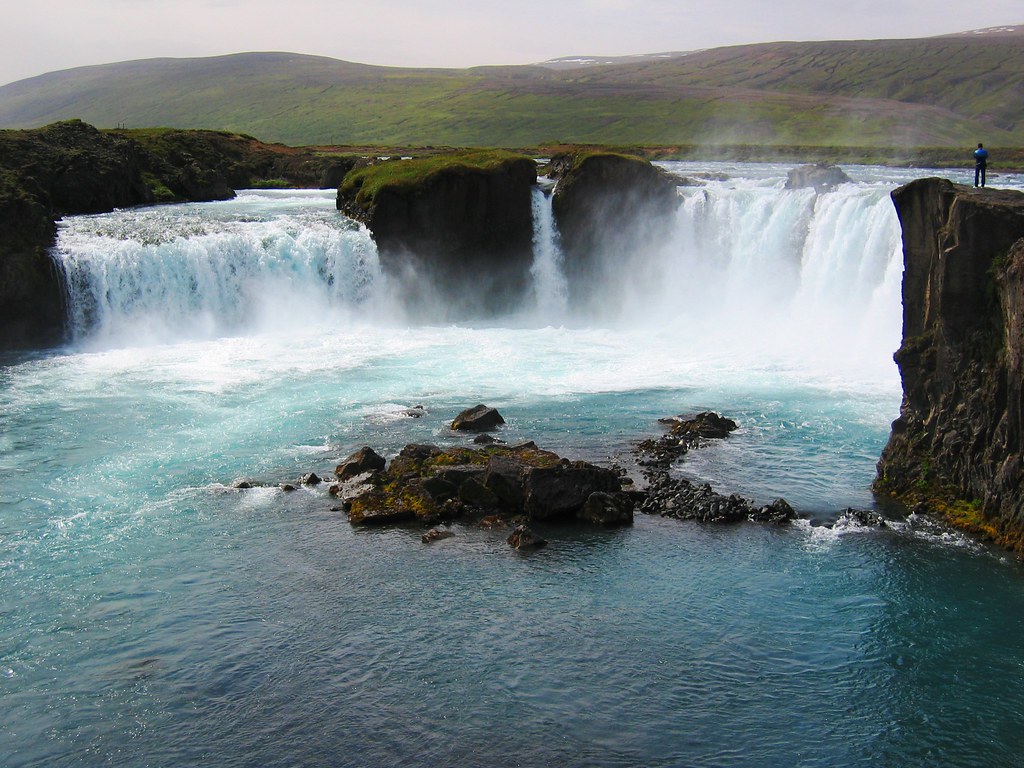
The Go�afoss waterfall in northern Iceland


Finally, I'll do my best to answer a few specific questions that were raised. I'd love to hear what the rest of you have to contribute!

Natalia from Poland asked about travel in the United States. I haven't traveled too extensively around the US, so I'm looking to my readers for more input on this one. But what I can tell you, Natalia, is that the US is HUGE and you will have to do a lot of flying if you want to see more than just the Eastern seabord. A good sampling of the different regions might include New York, Chicago, New Orleans, Las Vegas, and San Francisco (C'mon, you KNEW I'd have to list my beloved SF; it's the best city in the nation!). But you're talking about a lot of flights, so it's going to depend on how much time you've got. Obviously from Europe, the east coast is going to be a lot easier to get to than the west, but as someone who is very partial to the west, I'd say it's a must-see. Readers, what places would you suggest?

H to the izzo asked which countries are on the cheaper side. This is a tough one to answer, because these days your single biggest expense in any trip is probably going to be the airfare, and oftentimes places that are cheaper to travel in aren't necessarily cheaper to travel to. Take Argentina for instance; you can have an amazing steak dinner with appetizers, wine, and dessert for around $30 per person, and yet good luck finding airfare from the US for under $800. On the other hand you can often find cheap flights to London and Paris, two of Europe's most expensive cities. So you really have to take the whole trip into consideration here. I'd start with finding the cheapest airfares, and then worry about exchange rates and all that. As long as you keep your airfare low and stay in hostels, you can make pretty much any destination work for your budget.

And finally, Sara from New York hit me with this rather tricky one: "If you had a small, small budget (of about $2,000 total) and could only travel from January to March, for about a week to 10 days, where would you go?" First off, the weather at that time of year is going to be an issue in much of the Northern Hemisphere, and I'm assuming that the Southern Hemisphere is going to be too far to travel for such a short trip. Unless you really love darkness and cold, you'll definitely want to avoid Scandinavia (plus it's an expensive destination anyway) and the rest of Northern Europe. So if I'm assuming correctly and you're interested in not freezing, then I'd start with places like Spain, Mexico, Belize, and so on. The weather won't necessarily be ideal at that time of year, but it'll be better than say, Denmark or Poland. Definitely start with the airfare to narrow down your choices. If you can keep your airfare low then you're in pretty good shape already. Assume you'll be able to find hostel or B&B-style lodging for $10-20 per person per night, which puts your total lodging expenditure at $400 tops. If you can then find a destination that keeps your airfare around $400 per person or less, you'll still have about $800 to play with, or $80/day for a 10-day trip. It'll be very tight, but you can do it. Finding the cheapest hostels can free up a little more cash for meals and other expenses. Good luck; I'd love to hear back from you as you're making your plans!


Near the Charles Bridge in Prague, Czech Republic

Thanks again to everyone who contributed to this series; it was a lot of fun to put together. Feel free to stop in and make requests for future travel topics at any time!

Labels: ,

Monday, March 1, 2010

Making Your Travel Dreams a Reality, Part III

If you're just coming to this series now, I'd recommend getting caught up by reading Part I, which debunks some common excuses not to travel, and Part II, which talks about the money aspects of traveling. Today in my final installment, I'm going to discuss a few destinations that are great for families or for those who are new to traveling abroad and are seeking destinations that are less hectic than say, Rome or Tokyo. I'll also cover a few other things to consider when planning a trip.


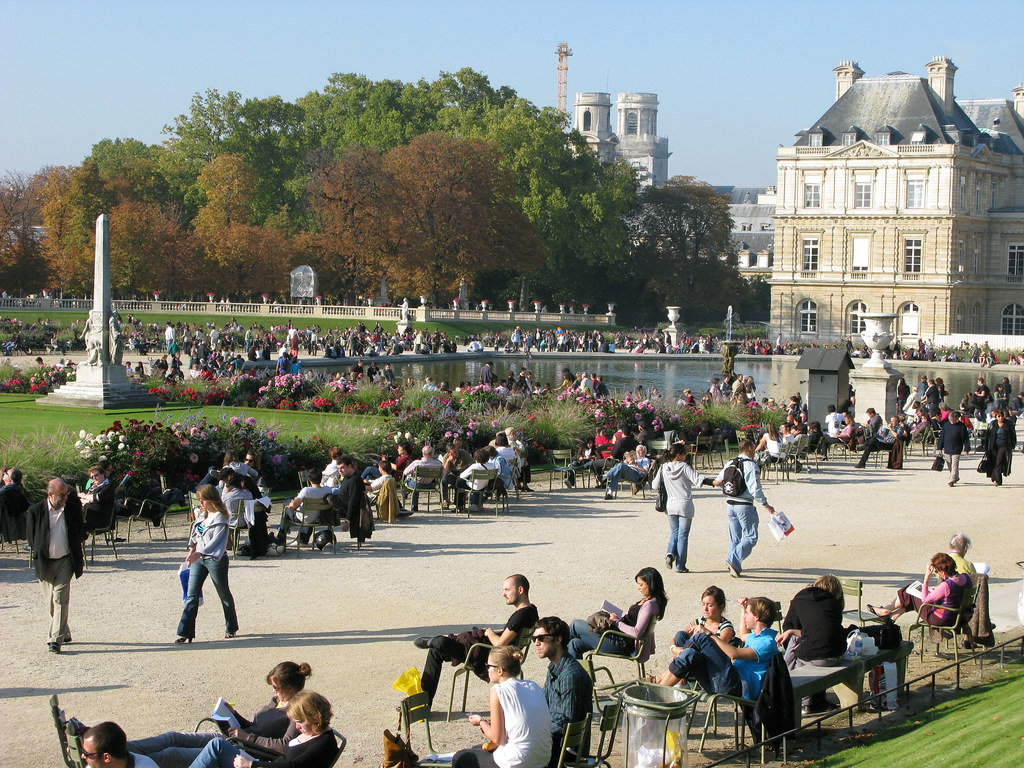
Parisians enjoying a beautiful fall day at the Jardins du Luxembourg


Destinations for Families and Travel-Newbies

Not having kids myself, I'm obviously no expert on the family aspect of traveling, so I'll leave it to my awesome readers who have kids to stop in and share their tips and experiences. I have, however, been to many destinations that struck me as just perfect for families or for those that may be new to overseas travel; laid back, low-stress destinations that would be great places to find your traveling legs before you take on some of the more challenging locations. Today I'm going to share a few of those places with you.


Destination: Salzburg, Austria

Austria is one of my favorite European countries to visit, and Salzburg and the surrounding area tops my list of great family destinations. From the medieval fortress that looms high over the city to the towering alps that surround the valley, Salzburg is a place for magnificent scenery, clean air, and quaint, quiet streets. And who can beat the fact that it was the setting for The Sound of Music? Watch the movie at home to prepare for your trip, then tour the locations when you get there. There are several organized tours that are offered, some of which can get quite boisterous and silly, with a whole busload of people singing the songs en route to each location.

For the adults, there are also excellent regional wines to be sampled, as well as several breweries (including one operated by Augustinian monks) and beer gardens. And since Salzburg is the birthplace of Mozart, musical performances abound. A concert up at the Festung is a one-of-a-kind experience; nothing beats listening to classical music in a great medieval hall. There are also several interesting destinations that make great day trips from Salburg, including the Eagle's Nest, which was Adolf Hitler's remote meeting place during WWII, and the salt mines in nearby Bavaria. Not to be missed is the charming town of Hallstatt, accessible only by boat and containing a fascinating ossuary, where due to the limited space in the churchyard, people were dug up after 10 years and their bones placed in the charnel house.


The view of Salzburg from the Festung Hohensalzburg


Fuel your love of all things morbid at the ossuary in Hallstatt, Austria


Destination: Copenhagen, Denmark

Copenhagen is another of my favorite European cities, and nothing sums it up better than the Danish concept of "hygge" (also written as huggelig). Though the word is translated as "coziness," it really means much more than that: it's the feeling of being in a welcoming environment with good friends, good food, and plenty of good cheer. Copenhagen is loaded with charming boutiques, snug coffee shops, and cobblestone-lined streets and alleys that bring this concept to life.

Families will enjoy visiting several nearby castles, such as Frederiksborg Palace and Helsing�r Castle, the inspiration for Elsinore Castle in Hamlet. Nearby Roskilde has a magnificent cathedral as well as the outstanding Viking museum, where you can see several Viking longships that were recovered from a nearby fjord. Copenhagen, and actually all of Denmark, is also an excellent place to rent a bike and go exploring; with its bike-friendly streets and flat landscape, there's really no better way to get around than on a bike, and it's also a great way to experience something that is an integral part of Copenhagen culture.


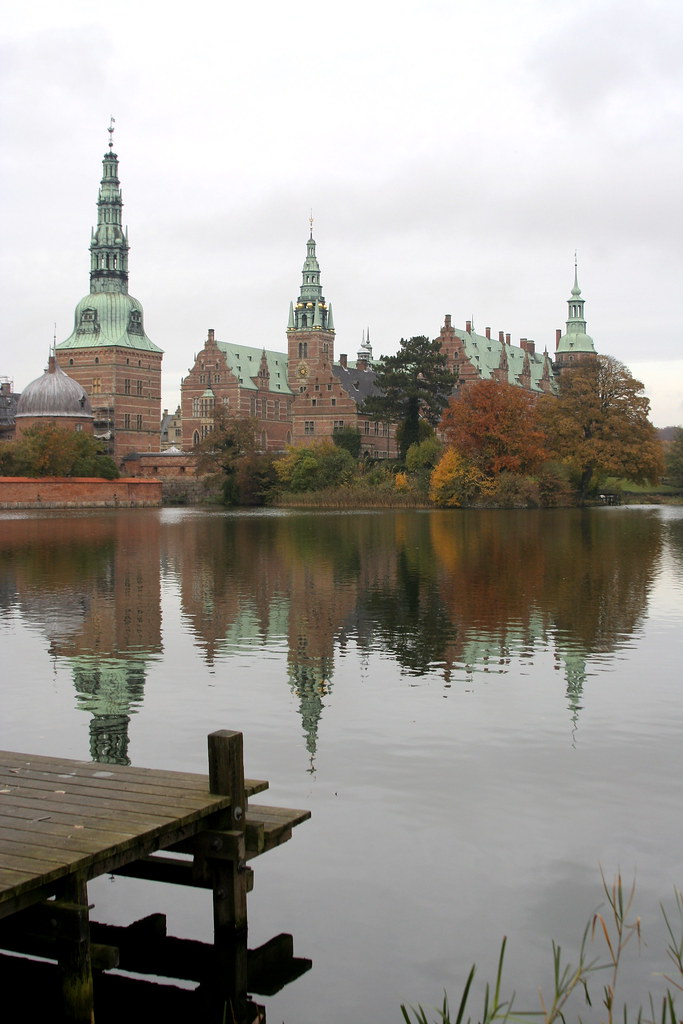
Fall colors at Frederiskborg Palace; Hiller�d, Denmark


Destination: Krakow, Poland

Krakow is a charming city, and one that is rich with history. Though stifled under Soviet oppression for decades, Krakow is now a vibrant and lively town, where the old town square is still the actual city center, rather than strictly a destination for tourists. Here among the grand buildings and shop-lined streets you'll see couples walking arm in arm, and groups of friends headed out for an evening of fun. Surrounding the heart of the city is the wooded Planty, a narrow green belt where the old city wall used to be. While in town, be sure to ask a local to tell you the story behind the bugler who plays from the tower of Saint Mary's church in the old town square.

Though the experience is sad beyond belief, a visit to the Auschwitz-Birkenau concentration camp is a must, if only to understand the scale and importance of what happened there. As most of the WWII generation grows old and passes on, it's a way for the rest of us to maintain our perspective on the horrors of war and the dangers of allowing prejudice to become policy. Though it's certainly not a "fun" activity, it's an enriching and a necessary one. I think many kids in the US could benefit by seeing something so haunting and so sobering. We have so very much that we take for granted here; Auschwitz is a monument to sadness and loss on a scale that's hard to imagine.


The Krakow old town square at night


Planning for Time Off

You already know from Part I of this series how I feel about people who use work as an excuse not to travel. Sure, you might be busy at work, and perhaps you're even quite an important person at your company. But unless you're the sole owner and operator of your business, your colleagues can hold down the fort for a few weeks while you take a vacation. But of course there are other aspects of taking time off, which I'll discuss here.

  • Don't put off big things until the last minute. Make sure you've arranged for pet care, a house-sitter, and time off from work at least a couple months in advance.
  • Make sure you've arranged your finances well in advance so that money is accessible. Find out about credit card fees and ATM charges for oversees transactions, and if need be get a new credit card and/or transfer money to a different account. Don't let your financial institution hold your money hostage while you're away. It's also a great idea to carry a backup credit and/or debit card, which should be kept locked in your luggage just in case your wallet ends up in the hands of a pickpocket.
  • Plan for bill payment while you're gone so that you don't incur late fees. If you're going to have someone drop off a rent check or other payment for you, be sure to make arrangements for that in advance.
  • Before you leave, shut off and unplug as many appliances and other electronic devices as you can. Shut off the water valve to your washing machine too; what could be worse than coming home to a burst pipe and a floor covered in water and mildew?
  • If you're worried about the security of your house, consider leaving your most precious items with a friend or family member for safe keeping. Better still, have someone house sit for even more peace of mind.


A picturesque canal in Bruges, Belgium


Other Considerations for Planning a Trip

An important aspect of travel which many people fail to consider is, what type of traveler are you? Are you a planner, who prefers to have a strict itinerary, or are you seeking spontaneity? Would you rather spend quiet days perusing ancient libraries and museums, or is it nightlife you're after? Do you like big cities, quiet countrysides, the major tourist destinations, or the places no one's ever heard of? How you prefer to travel is especially important in determining who you want to do it with.

I often prefer to travel alone because I have a fairly haphazard approach, often changing flights and other arrangements along the way, or arriving in a city without first booking lodging (do NOT do this if you travel in the high season!). Many people aren't comfortable with traveling that way, and for myself I feel bogged down with having to adhere to a schedule. Don't be afraid to go it alone if you can't find anyone to go with you, or if you're not sure of a potential travel mate's compatibility with your style. And unless your traveling companion is just as committed to taking the trip as you are, there's a chance they may keep you waiting indefinitely and in some cases forever. I love the freedom and flexibility of traveling solo, and I find that I meet many more people that way.

Remember also that it's perfectly fine if it ISN'T your dream to travel; the important thing is to recognize it and be ok with it. You might be surprised to hear that Mark isn't a big traveler; for him a trip once in awhile is fine, but it's not something he's passionate about. It actually works out great for us because he takes care of my apartment and pets while I'm gone; he's happy to see me doing what I love and I can travel with greater peace of mind, knowing he's at home taking care of everything. So don't just travel because you feel like you ought to; if it's not your cup of tea then don't go, or consider just spending time exploring your local area instead.

Finally, here are a few other random things to consider:

  • Many countries require that your passport is valid for at least 6 months after the date you're planning on departing, so make sure you allow plenty of time for a renewal if need be. On a similar note, find out about visa requirements far in advance. Always leave a copy of your passport at home, and take a couple extra copies with you to keep locked in your luggage or some other secure place.

  • Vaccinations may be recommended depending on where you're going (typically jungle areas or third world countries), so be sure to find out.
  • How far in advance you book your airfare and lodging depends on many factors: how locked in your schedule is, what time of year you're going, and whether you're using frequent flyer miles to book your airfare. I'd say 2-3 months in advance is sufficient unless you're doing something like going to Munich for Oktoberfest or to Rio De Janeiro for Carnivale. If you're planning your trip around a major festival or holiday, you'll probably need to book it at least 6 months in advance, especially your lodging.

  • Always check the current TSA regulations to find out what can be carried on. Also check the rules for whatever country you're flying in and out of. For instance, Mexico requires that you're checked in and at the airport an hour before your flight, and they also do not accept boarding passes printed at home. Knowing the rules before you travel saves you a lot of stress later.
  • Another great resource for American travelers (or travlers to the US) is the US Department of State website. There you'll find info on passports, visas, and all sorts of info on different countries.

    I hope this series has inspired you and answered whatever questions you may have. Now let's talk travel! Stop in and comment, ask questions, share ideas for destinations or tell me where you're going next. I love talking travel even more than I love talking fashion!

Labels: ,

Thursday, February 25, 2010

Making Your Travel Dream a Reality, Part II: Money Matters

Today I'm bringing you another installment in my series on making your travel dreams a reality. As I started roughing out my ideas I realized there was way too much to discuss in one post, so in this one I'm going to focus entirely on money: saving for a trip, how much to save, and traveling on a budget. The series will stretch into at least one post beyond this, and possibly two. I'm not sure why the first part of this series is out of order and behind my last outfit post, but if you haven't seen it yet you might want to start reading here.


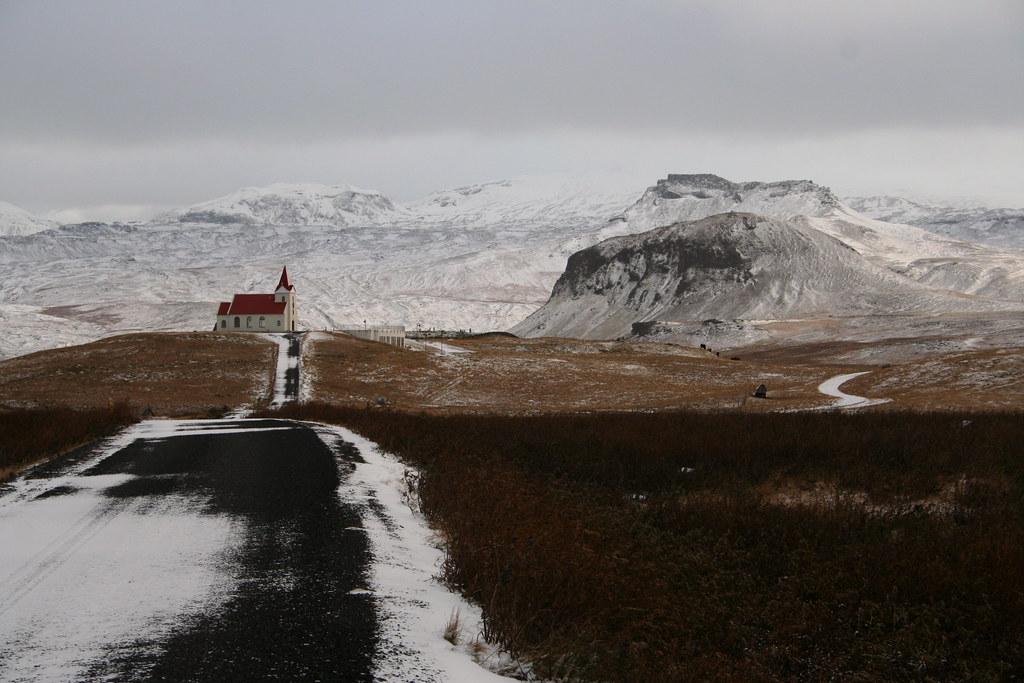
A church on the Sn�fellsness peninsula, Iceland


Now that I've debunked some of the most common excuses for putting off travel, I'm going to go a step further and provide you with some tools for dealing with each of the very real challenges that travel can present. Today I'll talk about the single biggest challenge for many people, money. La Historiadora de Moda stopped by yesterday with this very valid comment:

"I don't want to be a bah-humbug because in general I do think that people should travel and make an effort and sacrifices to achieve their dreams. However, I have to say that in some cases Excuse #1 is valid for many people. Considering the unemployment rate and the fact that many people are really struggling to make ends meet, I wouldn't necessarily recommend that they travel before they pay off their credit cards, especially when banks and credit card companies are often hiking up interest rates and charging extra fees."

This is absolutely true. I would NEVER advocate running up more expenses if you're already in debt or struggling financially. But I will say this: Americans in particular often suffer from a spectacular inability to see any but the narrowest of possibilities for their lives. I've met many an Australian or Canadian in my travels who, upon graduation, took off for 6 months to a year and traveled the globe before settling into grown-up life. These were not rich kids living on trust funds; they lived on shoestring budgets and often stopped somewhere for several months while they earned enough money to continue their travels.

If a recent college grad can do it, perhaps someone who has recently found him or herself unemployed can pull it off too. Even a hardship can become an opportunity, because it might be just the kick in the pants you need to start thinking more creatively about your options in life.

I'm not saying you ought to sell all your worldly possessions and go traipsing around the globe until the economy recovers, I'm merely pointing out that there are often many other options than our narrow ways of thinking will allow us to see. Maybe you could teach English in Japan for a year; perhaps you could find seasonal work on a ship in the Mediterranean; and yes, perhaps you could sell everything you own, pay off your debts, and get the hell out of dodge for awhile. Why not? I can guarantee that there is no thing you can own, even the most fabulous pair of shoes, that will ever equal in value the amazing memories you will make while you're traveling. So at the very least, think about it before you dismiss the option of traveling, whether it be for weeks or years or anything in between.


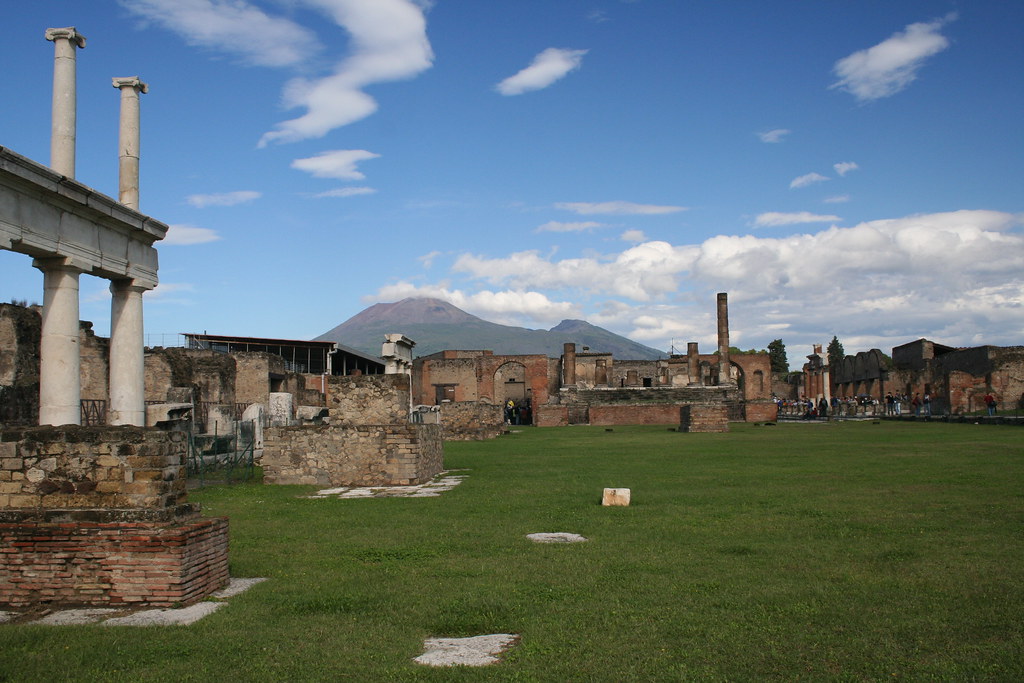
The ruins at Pompeii, Italy


Saving for Your Trip

There are literally thousands of ways to save money, and in the end it's probably not going to be any one thing you do, but several. Here are just a few money-saving ideas off the top of my head:

  • Cancel your cable or magazine subscriptions and put that money aside every month
  • Sell off items you don't need anymore on eBay
  • Take the bus instead of driving and put aside what you'd have spent on gas. Better yet, sell your car if you don't need it and save on insurance money too.
  • Ask family and friends to donate to your travel fund instead of giving you gifts for your birthday or holidays
  • Set up a free Fat Wallet account and use your cash back rewards towards travel (obviously, don't buy stuff just for the rewards unless you were going to buy it anyway!)
  • Cut out your daily Starbuck's fix and brew your coffee at home
  • If you're undisciplined at saving, it's wise to set up a separate savings account that makes the money more difficult to get at. If you don't mind a bit of risk, try turning your savings into a reasonably stable stock, which can create additional earnings. ETrade and Ameritrade are both easy to use, even for the non investment savvy. And no, I will not give you stock tips!
Obviously it's easiest to put aside money that you're already used to living without, so cutting an expense and then squirrelling that money away is easier than telling yourself you need to save so many dollars per month on top of your current expenses. As a last resort, there is also the option of working a part time second job until you've saved enough. That's a pretty big step, so don't jump into it lightly; your life, your relationships, your sleep may suffer if you're already working full time. Be careful with this option, but consider it if need be. Students in particular have lots of options here; grading papers, tutoring, lab assistant positions, the campus bookstore, and so on.

You might be wondering what sacrifices I make for travel. The biggest one is that I opted not to own a house or condo. Although many people will tell you that owning a house is better than renting because you can write off the interest, you're really just spending a lot to save a little if your mortgage is significantly more than rent would be. For me, owning even a small condo in San Francisco, where the monthly interest portion alone would exceed my current rent, just didn't make financial sense to me. And then, houses can be a huge money-suck in repairs and maintenance, none of which you can write off. So I opted not to be house-poor, which allows me both the luxury of traveling every year, and living a pretty fab life the rest of the time too. It works for me, because I've owned a home before and found I didn't much like the responsibility and burden of it.


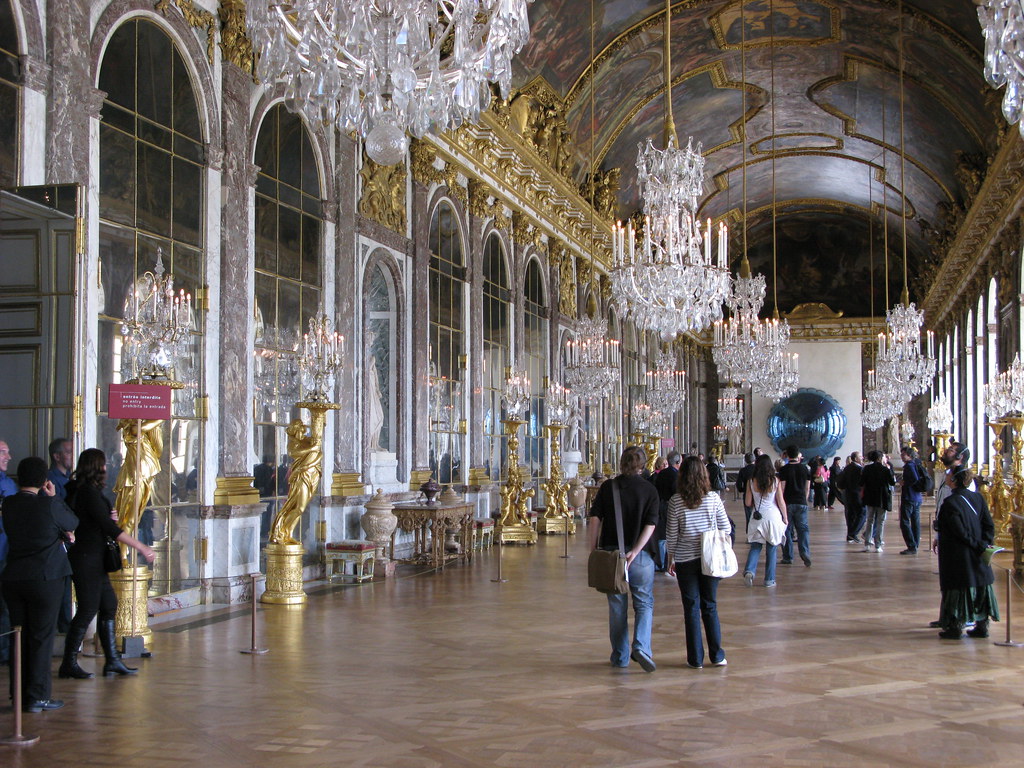
The Hall of Mirrors at the Palace of Versailles, France


How Much to Save

This depends greatly upon where you're going, for how long, and at what time of year. You will first need to do some research on whatever city or country you're considering and find out what the average daily expenditure is. It also helps to prepare a travel budget; try these free online calculators to get started:
Saving For Travel
Independent Traveler
Budget Your Trip

It also depends heavily on where you're willing to cut costs and where you're not. If you're locked into traveling in high season because of the kids' school year, then you'll have to contend with higher airfare and lodging costs, and that may mean cutting back on fancy meals and shopping. If you're willing to go in the off-season then you'll be able to save more on the major expenses, not to mention the fact that things will be less crowded. Personally I prefer to travel in the shoulder seasons, when things are slower but not entirely dead either.

A good starting point would be about $3000 per person for a 2-3 week trip, but believe me you can do it for even less. Bethany and Isaac commented yesterday that she and her husband took a 3-week trip to notoriously pricey England, France, Italy, and Greece for around $2500 apiece including airfare; it takes a bit of creativity, but it can be done. Which brings me to the next topic of traveling on a budget.


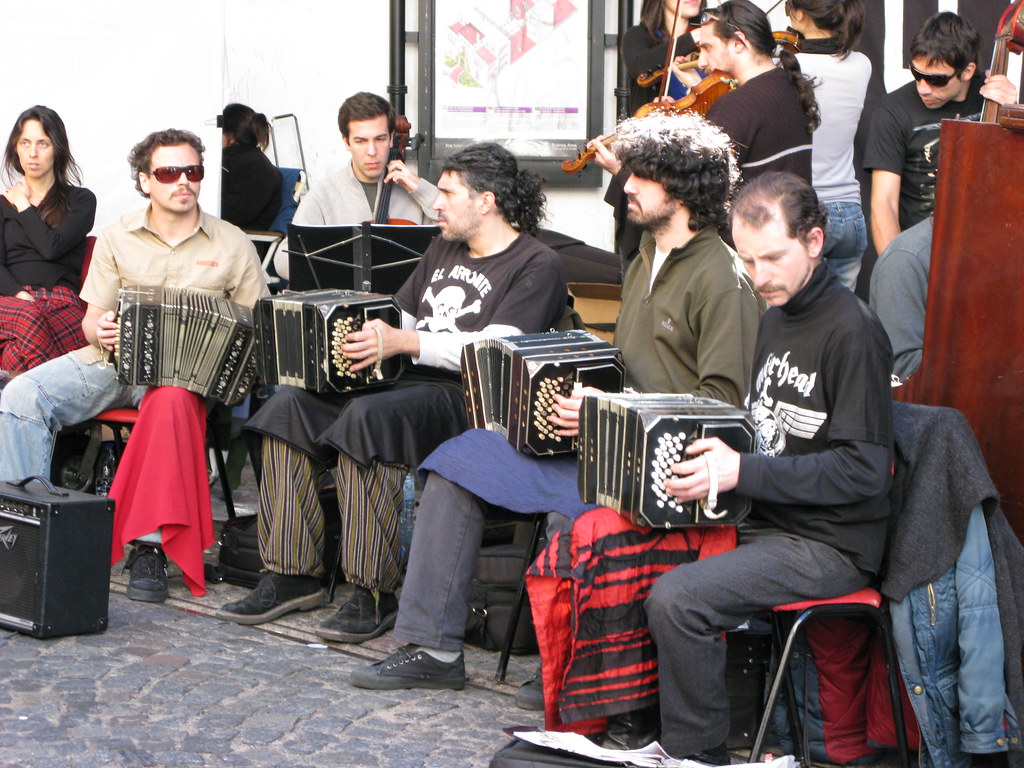
A local tango band plays for onlookers at the San Telmo flea market; Buenos Aires, Argentina


Traveling on a Budget

Your two big-ticket items on any trip are going to be airfare and lodging, so let's start with those. First off is the airfare. I generally like to book my airfare well in advance, so that it's all paid for by the time I leave for my trip. And by thinking about my trip many months before I'll take it, I have time to shop around for the best fares. Sometimes you can get a last-minute fare at a discounted price, but remember that you might pay for it in other ways; for instance, affordable lodgings might be all booked up. Keep that in mind as you're searching for fares.

Finding the best fare:

  • Travel in the off season, or in a shoulder season. You will undoubtedly pay less if you don't travel around major holidays or in the height of the tourist season.
  • Pay attention not only to your own national holidays, but those in the place you're traveling to. Holidays and festivals almost always mean higher airfare as well as more expensive lodging.
  • Sign up for email alerts from your preferred airline, or set up a saved itinerary on multi-airline search engines such as Kayak, Expedia, or Orbitz. The website will alert you when your fare reaches a certain setpoint or changes in price. For maximum coverage, set up alerts on several different sites and with multiple itineraries.
  • Don't forget about airline miles. Air travel isn't the only way to earn miles; many credit cards offer airline miles, as do hotels, car rentals, and even certain retailers. Check with the particular airline to find out how to earn miles.
  • You don't necessarily need to earn enough miles for a free ticket; many airlines offer reduced fares when combined with miles, which means you need to save up fewer miles to get the benefit.
  • Be flexible with your itinerary. Traveling on weekends can often increase the fare, so be sure to check prices of itineraries a few days before and after your target dates.
  • Consider flying into and out of alternate airports. It might be significantly cheaper to fly into a nearby city and take the train to your final destination. Sometimes those nearby cities can be destinations themselves, so you can always build in a night or two at your arrival point.
  • For the greatest flexibility, consider changing your destination altogether. Make a list of the top 4 or 5 places you'd like to visit; compare airfares, currency exchange rates, and lodging to make your final decision. Assume that you will travel again; you'll get to the others the next time!


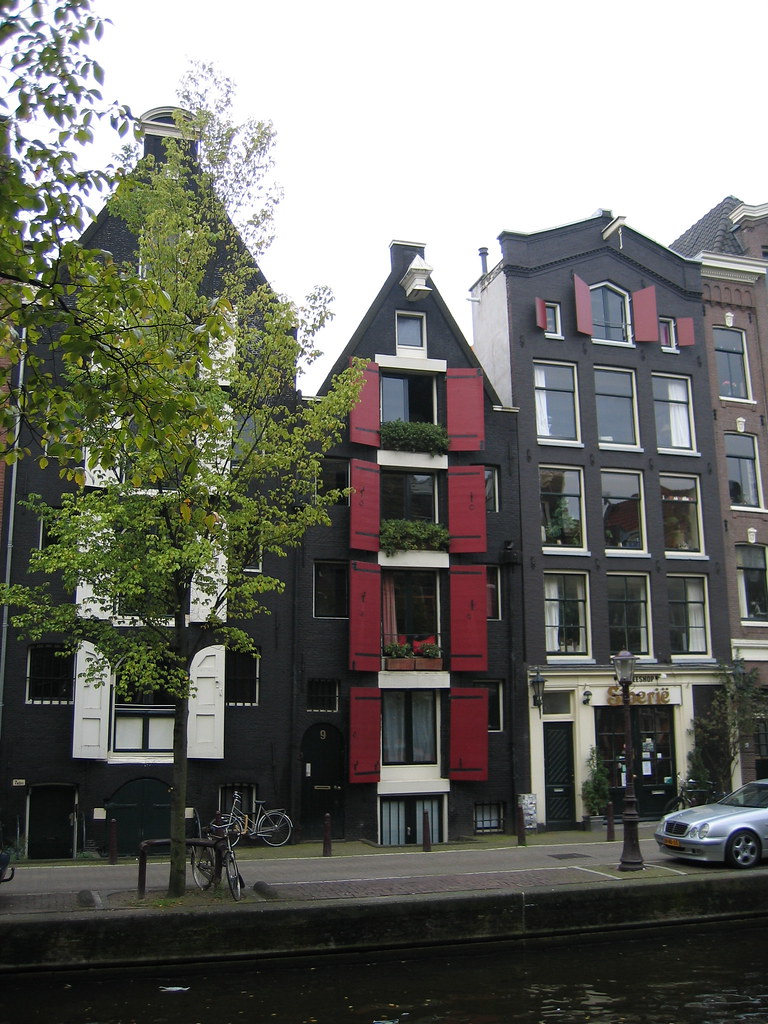
Tall, narrow houses along an Amsterdam canal


Saving money on lodging:

Lodging often ends up as the largest expense for travelers, and it really doesn't need to be. It's just plain madness to drop $200-300 a night on a hotel room that you really should only be in while you're sleeping and getting dressed. Hostels, guesthouses, and other budget lodgings are the way to go. Here are a few things you might not know about hostels:
  • They're not just for youth anymore; many hostels no longer carry age restrictions of any kind.
  • Many offer small private rooms, some with private baths.
  • Most have communal kitchen areas where you can store and prepare your own food, which is yet another way to save money.
  • Most offer lockers for your luggage (you need to bring your own lock), or even lock boxes for valuables.
  • Many do not have curfews, and I haven't seen any where they kick you and your luggage out every day like they did back in the 60's. If you're booked for several days, all your stuff stays there for the duration.
  • Many offer free Internet services, and some also have free breakfasts.
  • They're a great resource for finding out about free walking tours and other fun things to do on the cheap.

But honestly, the best part about hostels is that they're FUN! Although I could afford hotels, I much prefer the vibrant, lively environment of a hostel, where travelers congregate in common areas to share travel stories, show off their photos, or just drink beer and play cards. Sure, most of the people I meet in hostels are a lot younger than I am, but I've never felt like an outsider even in a hostel full of college-age travelers. I've also seen people much older than myself joining in the fun, so don't worry about fitting in. That said, I do avoid places that bill themselves as a "party hostel" because even though I do like to party, I don't want to do it 24/7. Be sure to read the reviews of each hostel before you book; many of the reviews include the reviewer's age and other information that'll help you determine if they have the same priorities as you.

A dorm bed in an average hostel can set you back as little as 10 bucks a night. Ten bucks! That's very likely cheaper than what you pay for rent at home. Even in pricey Paris, I only paid $30/night for my lodging, and that was in a very new, modern hostel in a great part of town. I enjoy the dorm rooms because they're another great way to meet people, and I'll tell ya, I prefer the mixed dorms over those for women only. Here's why: a college-age gal will stagger in at 3 am, flip on the lights, rifle through her bag of toiletries, and then proceed to march in and out between the room and the bathroom half a dozen times before she finally goes to bed. A college age guy will stagger in, fall into bed fully clothed, and pass out. The next morning, guess who's up at the fucking crack of dawn, marching in and out of the room again, and who rolls out of bed fully clothed and heads off to breakfast just before the kitchen closes? Bring on the male dorm-mates any day.

Now, here are a few hostelling sites to get you started:
Hostels.com
Hostelworld.com
Hostelling International

Be sure to get yourself a Hostelling International membership; you will save money on hostel rates, and they also offer discounted travel insurance (including some health coverage), savings on international phone calls, and all sorts of other great benefits. Another way to save money on lodging is to bring your own travel sheet or sleep sack. Many hostels provide pillows and blankets but have an additional charge for linens; your sleep sheet is like a thin sleeping bag that covers you and your pillow so that sheets aren't necessary. The silk ones are the lightest and most comfortable, and are worth the investment if you're going to do a lot of traveling.


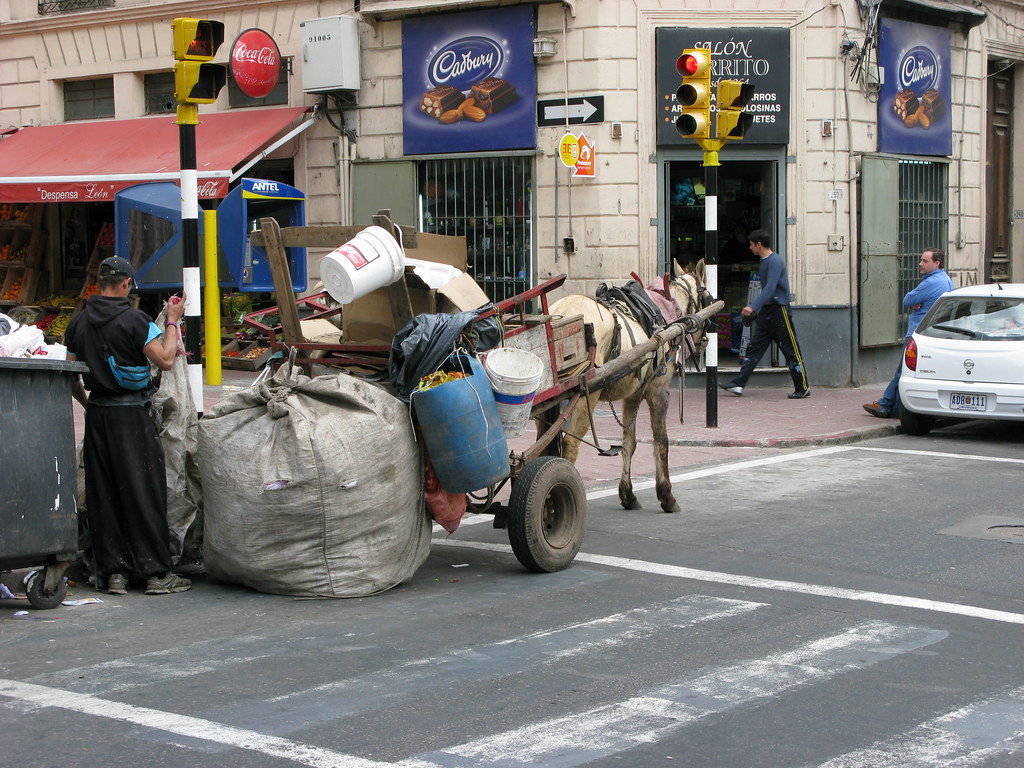
The garbage "truck" in Montevideo, Uruguay


Other ways to save money while traveling:

  • I've heard tell that rail passes can be a great way to save money on ground transportation, but I haven't found that to be the case because I'm too loosey-goosey a traveler to be sure I'll use my rail pass enough times to make it worth it. If you plan on doing a LOT of rail travel then it's probably the way to go, but I personally like to park myself in one spot for awhile and savor the culture, rather than do a whirlwind tour. I could go either way on this one.
  • Save money on food by hitting the local markets and preparing simple breakfasts and lunches yourself. But remember that you'd be eating at home too, so this isn't necessarily an additional expense of traveling.
  • Your hostelling card will get you discounts on museum admissions and so forth, so check the benefits before you go.
  • If you're not from the EU, don't forget to take your VAT (Value-Added Tax) refund when you leave Europe! Be sure you're familiar with all the steps; the refund is substantial (up to 25%!), so look for stores that have the Tax-Free sign in their windows when you shop. Read more about the process here. It's not nearly as troublesome as it sounds.
  • The Rick Steves and Lonely Planet guidebooks and websites offer all sorts of tips for budget-minded travelers. I prefer to buy a travel book ahead of time and read through it before I go, so that I'm not trying to search for information on the fly.
  • Packing light will help you avoid both excess baggage fees as well as a sore back. For tips on packing, see my previous series here: Beauty Products Parts 1 and 2, and Clothing Parts 1 and 2. Take light layers that can easily be washed in the sink and that will air dry overnight, which will help you avoid spending money on laundry.
  • Make sure your credit card doesn't charge foreign transaction fees. You'll have to read the fine print to figure it out, but it's worth it because the fees can be as high as 3%. Consider getting a card just for travel; many credit unions offer cards with no foreign transaction fees. Aslo, find out what your ATM withdrawal fees will be, and consider transferring money around if you have an account with lower fees.


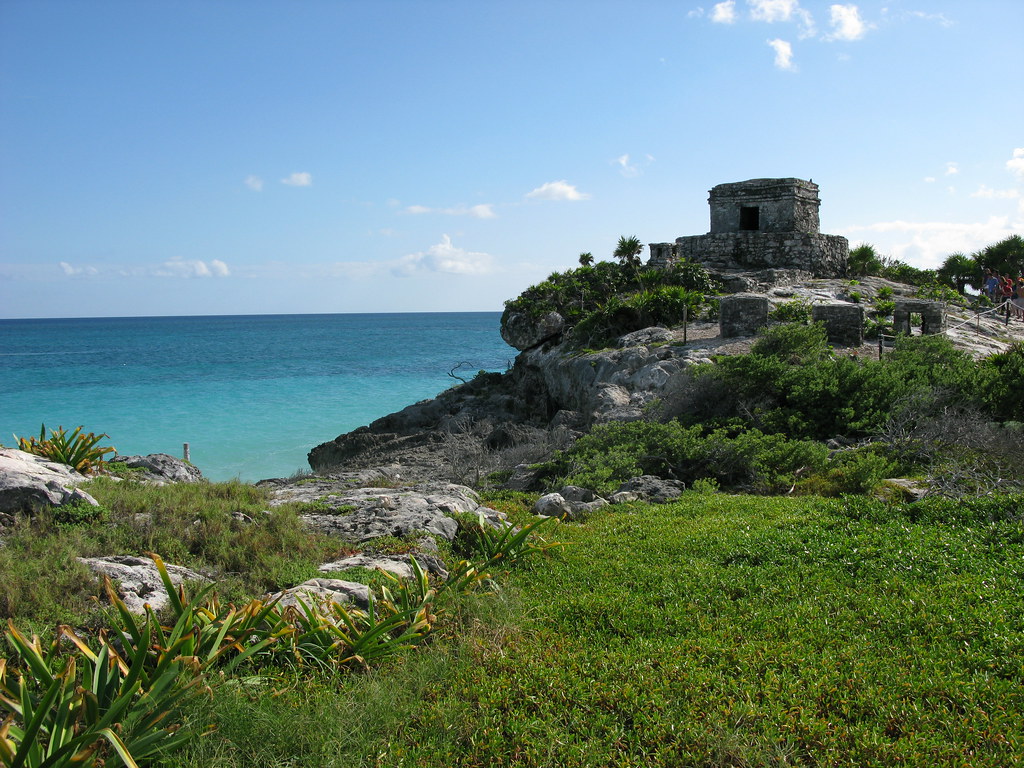
The Mayan ruins at Tulum; Quintana Roo, Mexico


In the remainder of this series I'll talk about destinations for families, planning for time off, and other considerations for traveling. Be sure to read the comments to these posts as well; there's some good stuff here!

Labels: ,

Wednesday, February 24, 2010

Making Your Travel Dream a Reality, Part I: No More Excuses

Today I'm bringing you the first of a 2-part series about making your travel dreams come true. The reason I thought to bring you these posts is that every time I mention any of my travels here, I always get comments along the lines of, "I'd love to travel... someday." So these posts are all about why and how to make that someday TODAY, or as near to today as possible. Because many people keep saying 'someday' and then never make that someday a reality, and that's a terrible way to live your life. My personal philosophy is that I'd much rather regret things I did than the things I only WISH I'd done.


Classic cars on the street in Colonia del Sacramento, Uruguay


Today I'm going to cover the common excuses for why people put off their dreams of travel, and why I think those excuses are bogus. Hopefully by the end of this post I'll have convinced you that you really have no excuse not to travel, and tomorrow I'll talk about different strategies for making it happen.


Memento mori in the extreme; the Sedlec Ossuary, Kutna Hora, Czech Republic. Remembering that someday you will die is probably the most compelling reason to start acting on your dreams right now.


Excuse #1: I can't afford it.

Sure, this is a valid reason if we're talking about buying a ticket to Marrakesh right this very minute. But if your biggest dream in life is to travel, then believe me there are plenty of ways to figure out how to make it happen financially. You can't assume that you'll ever be richer than you are today. I'm not trying to depress you, I'm trying to motivate you to figure out what you can do today to save for that trip. Because if that trip is the big dream of your life, it's not just something you WANT to do, it's something you truly NEED to do.

But wait! There's more. Travel absolutely does not have to be a bank-breaking expense. Even notoriously expensive cities such as Paris or London can be visited without dropping thousands of dollars, so before you write off travel as a hobby for rich people, open your mind a little and prepare to rethink that notion. Tomorrow I'll share all sorts of strategies for how and how much to save for a trip, as well as some tips for traveling on the cheap, which oddly enough can also make travel an even richer experience.


The colorful landscape of the Kastellet; Copenhagen, Denmark


Excuse #2: I'm waiting until the kids get older.

Let me break the news to you: there is never going to be an ideal time to travel with kids. If you go when they're younger you'll be limited in what you can do and how much they'll get out of it. If you wait until they're older the expenses will be greater and you'll probably end up arguing with them about where to go and what to do. But if you wait until they move out, it's entirely possible that health or other circumstances could prevent you from going at all, so you might as well just figure out how to make it work now. Lots and lots of people travel with kids and do just fine, so there's no reason you can't do it too. These days there are all sorts of online forums and travel guides that cater specifically to families, and many destinations worldwide offer delights for adults and children alike. Tomorrow I'll provide a brief synopsis on a couple of destinations that I think would be great for families.

If taking the kids along doesn't suit you and you're lucky enough to have family or friends that are willing look after them, then by all means go that route. Travel will most certainly be cheaper and easier without the kids, and let's face it, even the most devoted parents need a break from their kids once in awhile. If you're feeling guilty at the thought of going on a fun vacation and leaving them at home, don't. Travel is YOUR dream; later on if it becomes theirs, they can plan a trip of their own and you'll have just the experience to help them do it.


The eerie Hill of Crosses in Siauliai, Lithuania


Excuse #3: It's a hassle/It's too dangerous.

Again, I hate to break it to you, but travel is probably never going to be less troublesome or more safe than it already is. In fact, you can pretty much bet that by this time next year there will be some new ridiculous TSA rigmarole that we'll have to go through to get on a plane, and undoubtedly it will be something that doesn't even make us any safer. But if travel is really and truly your dream, forget about all that; the actual flight is just a necessary evil, like going to work or paying your taxes; if you want to earn a paycheck or not go to jail, you just do it. Believe me, the rewards of travel more than make up for the hassle of getting there.

As for the safety aspect, I could point you to all sorts of statistics and discussion boards about whether it's safer to travel by car or by plane, but what would it really matter? Many, many places simply cannot be reached by car, so the point is moot. If you want to get there in any sort of reasonable time frame, you're going to have to get over any fears you may have about flying. Unless your phobia has to do with getting dry skin or catching someone's cold, the reality is that flying is still safer than driving any day.

If you're putting off travel because of the flight, you really have to ask yourself if it's the flight you're afraid of, or the travel itself. Fear of the unknown can be a powerful force, but don't forget that literally millions of people flow through all those exotic places every year, and they make it home just fine. Once you've dipped your foot in the travel pool, you'll find that the water is actually quite welcoming and comfortable. So please do not stay home because of safety concerns. Life is dangerous, but don't let that stop you from living it.


"Halt! I need to see your library card."
The magnificent national library in Vienna, Austria.


Excuse #4: I don't have the time.

This one is going to vary for each individual; some people actually don't earn any vacation time and others just fool themselves into thinking their place of business is going to come to a grinding halt if they don't show up for a couple of weeks. I think you can probably tell how I feel about the latter type; that's just plain bullshit and the weakest possible excuse I can think of (I used to be married to someone who subscribed to that belief, by the way). So let me move on to the true difficulty of not having vacation time. Only you know where you fit into this spectrum, but my feeling is that if you're working the sort of job that doesn't have any vacation benefits, then a few things may be possible:

  • Many jobs have flexible schedules whereby you can trade shifts with other people or work extra hours to save up some time off. It might require months of sacrifice and long hours worked, but trust me it will be worth it.

  • If you're confident in your ability to get another job, just quit that sucker and look for something else when you get back. Seriously. If you're not getting vacation benefits, the job is probably not worth sacrificing your dream for.

  • Are you a student? Even better; vacate your dorm or apartment at the end of the school year, put your stuff in storage, and go abroad for the summer. Make sure you save a little money to get yourself set up again when you get back. Now is a great time to travel, because you don't have kids or a mortgage or a career to tie you down. IT IS LIKELY THAT YOU WILL NEVER HAVE THIS MUCH FREEDOM AGAIN. Don't waste it.


I'd love to hear from you on this point. Obviously I'm in a full time, 9 to 5 job with very good vacation benefits, and it's been years since I've had to deal with a school schedule and/or hourly jobs. Please chime in if you have figured out other ways to travel without having vacation benefits; this is a forum for sharing ideas! Tomorrow I'll talk about ways to prepare for your time off.


Sunset at St. Mark's Square; Venice, Italy


Excuse #5: I don't speak the language.

Oh, come now. Do you think I speak Lithuanian and Czech and Polish and Italian and Icelandic? Okay, I speak a little Icelandic, and French. But I've also gone happily skipping right into countries where I didn't know a lick of the language and I got by just fine. People can be amazingly kind if you let them, and there's no better way to elicit that kindness than by being humble and polite, and letting a little vulnerability show. Even in notoriously snooty Paris, my rudimentary French got me zero snubs, rudeness, or haughty looks. ZERO.

That said, it takes very little effort to at least learn a few polite phrases that will get you most everything you need. There is no need to spend months studying a language in preparation for a trip; these days English is widely spoken and even where it's not, you'd be surprised at how far a few key words combined with gestures and drawings will go. Not only that, but it's actually quite fun finding those alternate ways to communicate.


The ultra-modern Sony center in Berlin, Germany


In closing, let me tell you about a few of the things that travel can bring to your life. For me, travel is not about the big, well-known landmarks; those are nice enough, but the real draw is the joy of experiencing a new culture, with all its intricacies and subtleties. And interestingly, it's also the misadventures and things that don't go according to plan that can create some of the most rewarding travel experiences. For example, one of my closest friendships was forged when I had my wallet stolen in Rome and a generous fellow American, a Chicagoan who I had only just met a few days before, loaned me enough cash to get me through until I could get my credit card replaced. I told you, people can be amazingly kind if you let them.

More than anything, travel is about the people you meet along the way. Not only do you encounter the denizens of wherever you're going, but you meet fellow travelers as well, and believe me, travel enthusiasts are some of the coolest people you'll ever know. Just last year I went to Austin and reconnected with a friend I met in Budapest. A couple of Christmases ago I went to Mexico and spent the holidays with a Scottish friend that I met in Iceland. Travel opens so many doors, whether it's enriching your knowledge of places and cultures and languages, or having friends to connect with anywhere you go in the world, or just finding out from other travelers about where you ought to go next. To me if you haven't traveled at least a little, you haven't really lived.


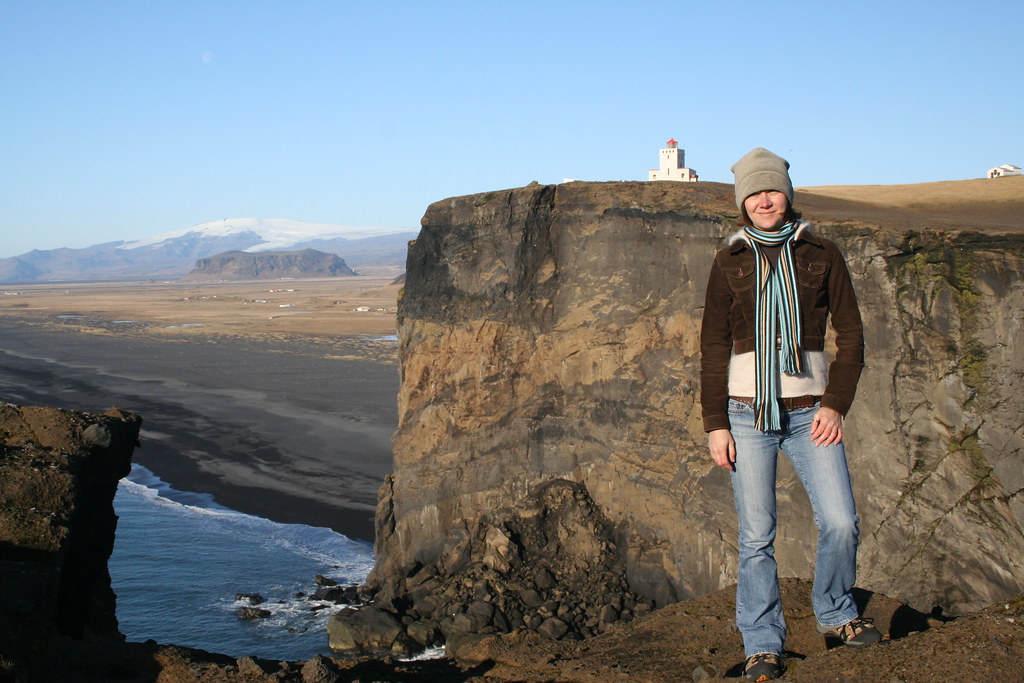
Here I am in 2005 at one of my favorite places in the world:
the cliffs at Dyrh�laey, Iceland.

Tune in tomorrow, when I will continue this series with the how-to's of travel on a budget!

Labels: ,